- Last reviewed
- June 13, 2026
- Best for
- Travelers visiting Japan in mid-August 2026
- Use this to decide
- City order, hotel timing, long-distance transport, luggage moves, and heat buffers
- Check before booking
- Official holiday calendar, rail and airline schedules, hotel cancellation rules, weather, and heat alerts
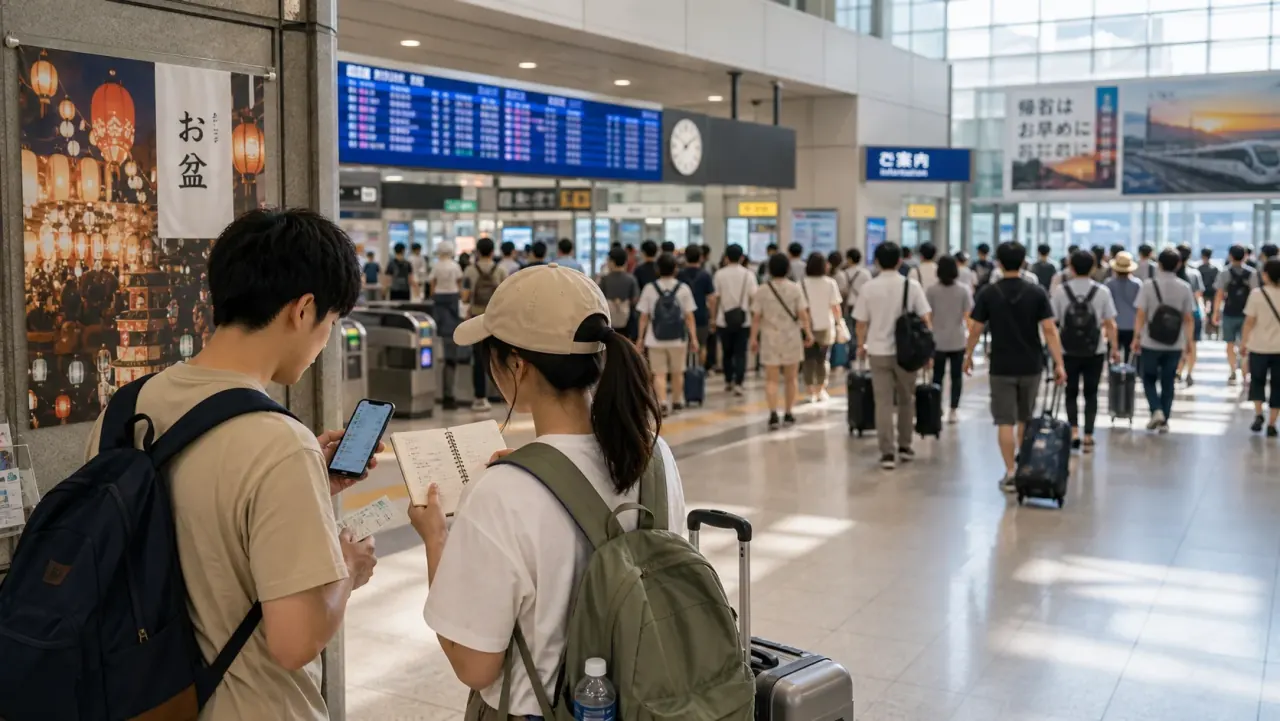
Obon can make a budget Japan trip feel more expensive even when attractions themselves do not change price. The pressure usually comes from domestic travel, family visits, hotel demand, station congestion, luggage friction, and August heat.
What Obon changes for tourists
For visitors, Obon is less about one sightseeing closure and more about travel friction. Intercity trains, flights, highways, hotels, luggage counters, and popular station areas can feel tighter. A normal Tokyo-Kyoto-Osaka route can still work, but the timing of hotel changes matters more than usual.
Book early enough to hold a sensible base, then re-check prices before the free-cancellation deadline.
A cheap fare is not a win if it forces a stressful station transfer with bags in August heat.
Use lockers, delivery, or simpler hotel changes when stations are busy.
Obon sits inside Japan's hot summer season, so crowd planning and heat planning belong together.
2026 dates to treat carefully
Confirm official calendars and transport schedules before paying for nonrefundable bookings. Obon customs vary by region and workplace, so treat the dates below as planning pressure points rather than a single official vacation block.
| Date window | Why it matters | Budget move |
|---|---|---|
| August 8-9, 2026 | Weekend before Mountain Day; some leisure and early travel pressure can begin. | Do not leave your first hotel booking until this weekend. |
| August 11, 2026 | Mountain Day falls on Tuesday in 2026, creating a holiday pressure point. | Avoid avoidable long-distance moves with luggage. |
| August 13-16, 2026 | Common mid-August Obon period; domestic travel and hotel demand can rise. | Use city bases, indoor plans, and refundable bookings. |
| August 17, 2026 | Return and settling period after the main mid-August window. | Add a buffer before airport departure or expensive day trips. |
Budget route strategy
The simplest Obon budget strategy is to avoid changing cities on the most pressured days. If your trip includes Tokyo, Kyoto, and Osaka, try to place the busiest mid-August dates inside one base rather than across two hotel checkouts and a Shinkansen ride.
| Trip style | Better Obon move | Risky move |
|---|---|---|
| First-time Tokyo-Kyoto-Osaka | Hold one city base through the peak and use local days. | Tokyo to Kyoto with large bags during the busiest window. |
| Family trip | Pay more for station access and fewer transfers. | Cheap outer hotel plus repeated hot walks and crowded trains. |
| Solo budget trip | Use hostels or business hotels with cancellation flexibility. | Nonrefundable capsule stays far from the route. |
| Day-trip heavy plan | Keep day trips optional and weather-aware. | Prepaying multiple crowded day trips back to back. |
Where to stay during Obon
During Obon, hotel location can be worth more than a small nightly discount. Choose bases that reduce transfers, support indoor breaks, and make airport or Shinkansen access straightforward.
- Tokyo: Ueno, Tokyo Station, Shinjuku, Ikebukuro, Asakusa, and Shinagawa can work depending on airport and train plans.
- Kyoto: Kyoto Station reduces luggage and intercity friction; Shijo-Kawaramachi can be better for food and city evenings.
- Osaka: Namba is useful for food and some airport routes; Umeda is strong for rail links and day trips.
- Fuji and resort areas: book cancellable rooms early and keep weather risk in mind.
Transport and luggage
Obon is a good time to spend selectively on reducing friction. That does not always mean buying the fastest ticket. It may mean choosing a hotel near the right station, shipping one suitcase, or scheduling a quieter travel day.
For fixed long-distance moves, check seat availability and avoid same-day improvising with bags.
Do not schedule a tight airport departure after a crowded station transfer.
Delivery is most useful when it turns a peak station transfer into a light daypack move.
In Kyoto and popular areas, walking less does not always mean taking the most crowded bus.
Sample 7-day Obon-aware route
| Day | Plan | Why it works |
|---|---|---|
| Day 1 | Arrive Tokyo, stay near useful rail access | Keep the first day simple and avoid a same-day city transfer. |
| Day 2 | Tokyo neighborhood clusters | Flexible city days absorb heat, crowds, and arrival fatigue. |
| Day 3 | Tokyo indoor/outdoor mix | Use museums, shopping streets, or station areas during midday heat. |
| Day 4 | Move to Kyoto or Osaka outside the worst pressure if possible | Make the only major move a planned move, not a rushed one. |
| Day 5 | Kyoto early start, area-based route | Group temples and food by area to reduce hot cross-city travel. |
| Day 6 | Osaka food base or optional Nara/Uji | Keep the day trip optional until weather and crowds are clearer. |
| Day 7 | Airport buffer day | Do not stack a famous sight, luggage move, and flight on the same day. |
What to avoid
- Nonrefundable hotels before you know your city order.
- Changing cities with large luggage during the busiest mid-August dates.
- Booking a cheap hotel that adds long uncovered walks in August heat.
- Scheduling Kyoto buses, famous temples, and a Shinkansen move in one packed day.
- Ignoring official heat information before committing to outdoor-heavy plans.
Sources and official checks
Before booking, verify Japan's national holiday calendar, your rail or airline schedule, and current weather conditions. For heat and weather planning, use Japan's official WBGT heat stroke prevention information and Japan Meteorological Agency updates.
FAQ
Is Obon a bad time for a first Japan trip?
It is not automatically bad, but it is less forgiving. A first trip can work if you keep hotel changes simple, avoid peak long-distance moves, and build in indoor summer breaks.
Should I book hotels before transport?
For Obon, hold refundable hotels early once you know the rough city order. Then check transport timing and refine the route before cancellation deadlines.
Is Kyoto too crowded during Obon?
Kyoto can feel crowded in popular areas, especially when heat pushes everyone into similar morning and evening windows. Start early, group nearby sights, and consider Osaka as a base if Kyoto prices are poor.
Start with city order, hotel base, and the days you should not move with luggage.
Open Route Hub