- Last reviewed
- May 30, 2026
- Best for
- First-time Japan travelers comparing practical booking decisions
- Price basis
- On-ground travel costs before international flights
- Use this to decide
- Budget, route, hotel, transport, internet, or insurance next steps
- Check before booking
- Official prices, pass rules, opening hours, and cancellation terms
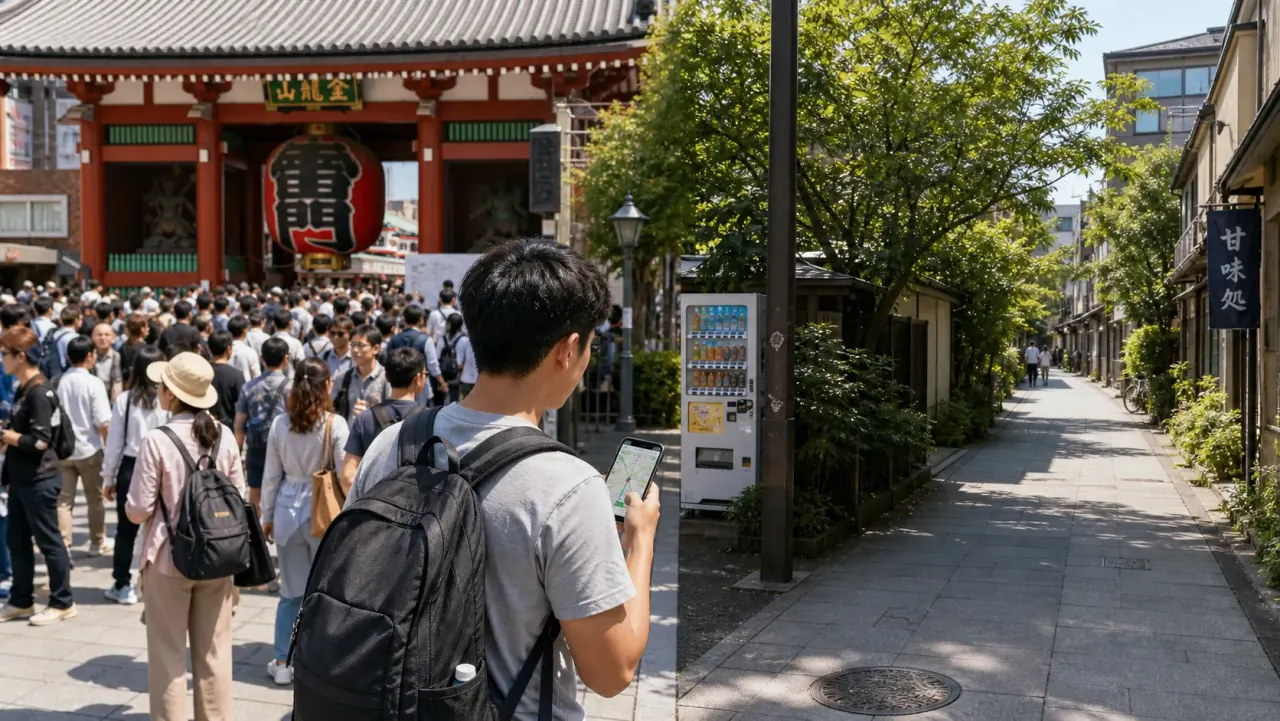
Japan is not too crowded everywhere, but the most famous routes can feel crowded in 2026. The pressure is concentrated around Tokyo, Kyoto, Osaka, Mount Fuji photo spots, cherry blossom weeks, and a handful of social-media landmarks.
Why Japan feels crowded
Japan's inbound tourism boom has pushed visitor numbers to record levels, while many travelers still follow the same Tokyo, Kyoto, Osaka, and Mount Fuji route. Recent reporting and official tourism policy discussions point to the same issue: visitor distribution, not just total visitor count.
That matters for budget travelers because crowds increase hidden costs: higher hotel prices, slower transport, paid reservations, sold-out buses, luggage friction, and less flexibility.
The crowd bottlenecks to plan around
| Area | Why it gets busy | Budget move |
|---|---|---|
| Kyoto east side | Temples, old streets, photos, day-trippers | Go early, sleep near useful transit, add Uji or Nara. |
| Mount Fuji viewpoints | Cherry blossoms, pagoda views, viral photo spots | Book transport early and avoid weekend midday arrivals. |
| Tokyo icons | Shibuya, Asakusa, teamLab-style indoor attractions | Group paid sights by area and reserve timed entries. |
| Osaka Dotonbori | Food photos, nightlife, first-trip routes | Visit after dinner rush or use nearby food streets. |
| Airport arrival routes | Late flights, luggage, first-time confusion | Choose hotels around direct rail or bus routes. |
Better months for fewer crowds
Late March to early April is usually the hardest period because cherry blossoms overlap with international demand. Late autumn can also be expensive. If your dates are flexible, consider late May, June outside major holidays, early September, or parts of winter.
There is no perfect empty month for Tokyo and Kyoto, but there are better combinations of cost, weather, and crowd levels.
How to build a calmer first route
- Keep Tokyo, Kyoto, Osaka if it is your first trip, but slow the pace.
- Sleep in a practical station area instead of chasing the most famous neighborhood.
- Add one second-tier stop: Kanazawa, Hiroshima, Fukuoka, Okayama, Nagano, or Uji.
- Use early mornings for the most famous sights and afternoons for neighborhoods.
- Do not move hotels too often. Crowded stations punish overpacked itineraries.
Crowd costs most travelers forget
Crowds can make the cheap option less cheap. A hotel far from useful stations may save money nightly but cost more in train transfers and time. A pass may look convenient, but it can be poor value if your route is simple. A taxi may look like an easy airport solution, but long airport rides can erase a day of food budget.
Use the Japan trip budget calculator, then check JR Pass alternatives and Tokyo budget hotel areas before booking.
Sources and context
This guide is based on recent JNTO visitor statistics, Japan tourism policy reporting, and 2026 news about crowd pressure around Mount Fuji and other headline destinations. See JNTO visitor statistics, Japan's overtourism policy targets, and AP coverage of Fujiyoshida crowd issues.
A good first Japan route still works in 2026 if you manage dates, hotel bases, and transport.
Open First Trip ChecklistIf a place is famous for one exact photo, assume midday crowds. Arrive early or replace it with a nearby neighborhood walk.