- Last reviewed
- June 12, 2026
- Best for
- Travelers visiting Japan in June, July, August, or early September
- Use this to decide
- Daily pacing, hotel base, indoor breaks, airport transfers, and route flexibility
- Check before booking
- WBGT/heat alerts, weather forecast, cancellation terms, and walking distance from stations
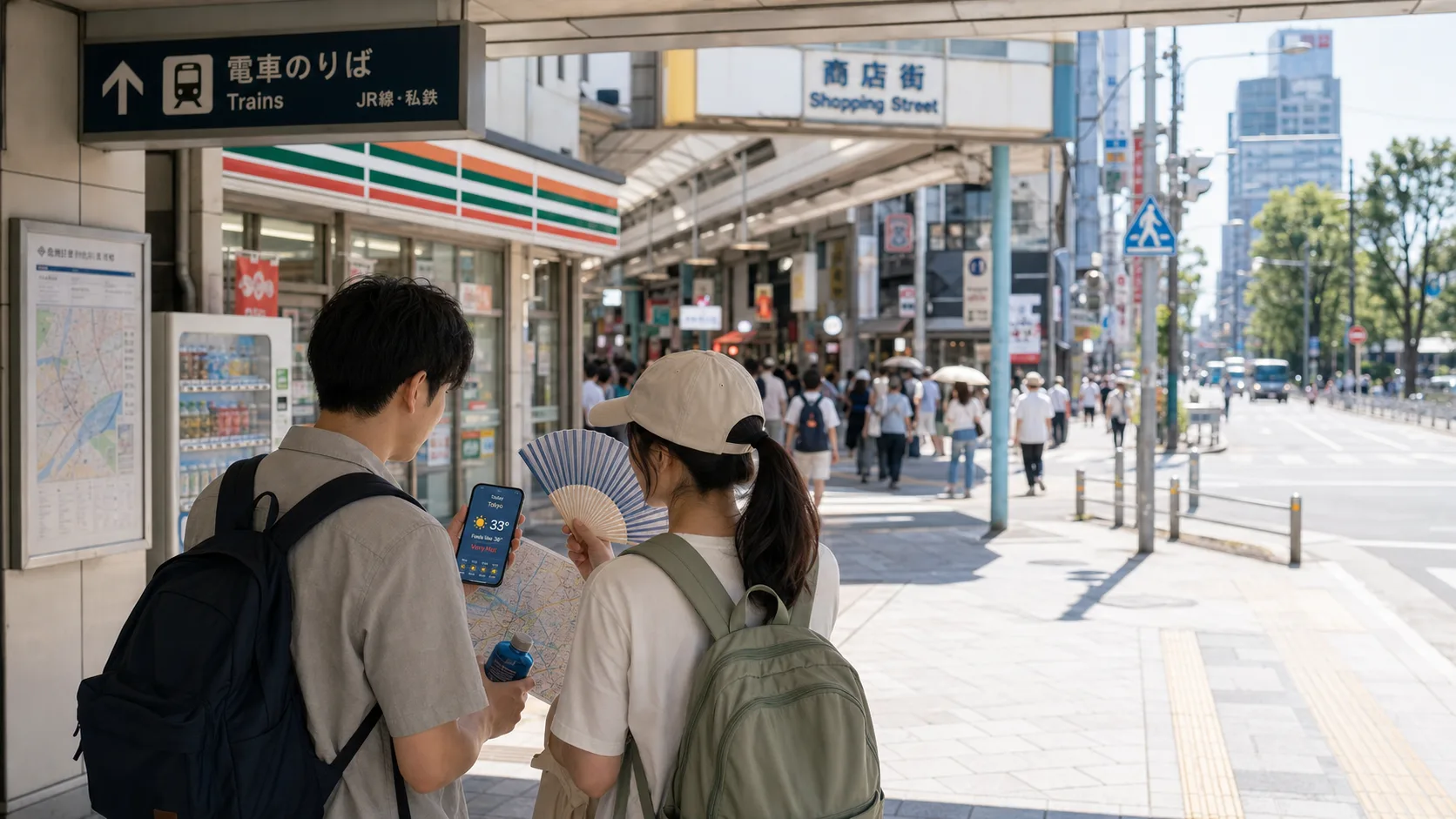
Summer in Japan can be rewarding, but heat and humidity change the economics of a budget trip. A cheap hotel that adds long walks, a crowded temple route at noon, or a late airport transfer with luggage can cost more than it saves.
What to check each morning
Use official weather and heat information before deciding the day's pace. Japan's Ministry of the Environment provides WBGT heat stroke prevention information, and the Japan Meteorological Agency provides weather and disaster information. Treat high heat as a route-planning constraint, not just a packing issue.
| Morning check | Why it matters | Budget move |
|---|---|---|
| WBGT / heat alert | Shows heat stress risk beyond simple temperature. | Move outdoor walking to morning or evening. |
| Hourly weather | Afternoon heat, rain, or storms can change the day. | Keep an indoor backup near your route. |
| Walking distance | Ten extra minutes can feel costly with bags and sun. | Favor station exits, covered streets, and short transfers. |
| Laundry | Summer clothes need faster rotation. | Choose hotels with coin laundry or nearby laundromats. |
City strategy for summer
Pair outdoor walks with department stores, museums, cafes, underground passages, or station-area breaks.
Do not cross Kyoto repeatedly in midday heat. Pick one area and build breaks around it.
Use Namba, Umeda, and covered shopping streets to reduce sun exposure between meals and stations.
Summer mountain weather can change quickly. Avoid prepaid plans that cannot adapt.
A summer-friendly day template
| Time | Plan | Budget logic |
|---|---|---|
| 7:00-10:30 | Main outdoor sight, shrine, park, or old street | Use cooler hours for the highest-value walk. |
| 10:30-12:00 | Transit and early lunch | Avoid the worst queue and heat overlap. |
| 12:00-15:30 | Museum, shopping street, hotel rest, cafe, or train move | Indoor time protects energy and reduces impulse spending. |
| 16:00-19:00 | Second outdoor area or food neighborhood | Evening light and cooler streets make the day feel better. |
Hotel choices matter more in summer
In summer, the best cheap hotel is often the one that reduces walking and transfers. Check the exact station exit, elevator access, laundry, check-in time, and whether there is food nearby after a hot day.
- Tokyo: Ueno, Asakusa, Shinjuku, Tokyo Station, or Ikebukuro can work depending on route.
- Kyoto: Kyoto Station and Shijo-Kawaramachi reduce different kinds of friction.
- Osaka: Namba and Umeda are useful for food, transport, and indoor options.
Crowds, school holidays, and festivals
Summer crowds are not only about international tourism. Domestic holidays, fireworks, festivals, school breaks, and weekends can affect hotels and transport. If your route includes famous events, book cancellable hotels earlier and keep one lower-pressure day afterward.
What to budget for
Small comfort spending can protect the whole trip. Budget for drinks, coin laundry, occasional taxis for luggage-heavy moves, indoor attractions, and a hotel location that reduces wasted walking.
Do not treat drinks as a surprise cost; build them into daily spending.
Coin laundry can be cheaper than overpacking and fighting luggage in heat.
A better airport route or luggage delivery can be worth more in summer.
Keep a museum, shopping street, cafe area, or hotel rest block ready.
Summer mistakes to avoid
- Planning Kyoto temples across multiple areas in the middle of the day.
- Booking a cheap hotel that adds long uncovered walks.
- Scheduling airport transfers too tightly after a long hot day.
- Ignoring laundry and then carrying too much luggage.
- Choosing only outdoor attractions with no indoor fallback.
Sources and official checks
For current heat risk, use Japan's official WBGT heat stroke prevention information and Japan Meteorological Agency weather updates. This guide is route-planning advice, not medical advice; travelers with health concerns should follow professional guidance.
FAQ
Is August a bad time to visit Japan?
August can be hot, humid, and busy, but it can still work with early starts, indoor breaks, and realistic city pacing. It is less forgiving for packed outdoor itineraries.
Should I skip Kyoto in summer?
Not necessarily. Kyoto is still worthwhile if you start early, group nearby sights, and avoid midday cross-city moves. Consider Osaka as a base if Kyoto hotels are expensive.
Does summer change the trip budget?
Yes. You may spend more on drinks, laundry, indoor breaks, better hotel locations, and occasional friction-reducing transport.
Summer planning starts with hotel base, indoor breaks, and realistic daily distance.
Open Route Hub