- Best for
- First-time Kansai visitors staying in Osaka or Kyoto
- Typical time
- 5 to 7 hours in Nara, plus train time
- Best station check
- Kintetsu Nara for park access, JR Nara for JR-based routes
- Main route
- Nara Park, Todai-ji, Kasuga Taisha, Higashimuki / Sanjo-dori food streets
- Budget note
- Train fare and one paid temple entry usually matter more than food cost
Nara is one of the easiest high-value day trips in Kansai. It adds a different feel from Kyoto and Osaka without requiring a hotel change, which is exactly why it works well for budget travelers.
From Osaka or Kyoto?
| Base | Best first check | Why |
|---|---|---|
| Osaka Namba | Kintetsu | Often the simplest route to Kintetsu Nara and the park side. |
| Osaka Umeda | JR or subway plus Kintetsu | Pick the route with fewer awkward station changes. |
| Kyoto Station | JR or Kintetsu | Both can work; hotel side and schedule decide. |
| Kyoto Shijo / Karasuma | Kintetsu-connected routes | Can be efficient if the transfer is clean. |
| Late start | Closest direct route | A late day trip should minimize transfers. |
JR vs Kintetsu
Kintetsu Nara Station is usually more convenient for Nara Park, Todai-ji, and the main sightseeing loop. JR Nara Station is still usable, but it generally adds more walking or a bus ride to the park side.
Use JR when your starting point makes JR simpler, when you are already using a covered JR route, or when the schedule fits better. Use Kintetsu when park access and fewer local transfers are the priority.
Simple first-time Nara route
- Arrive at Kintetsu Nara or JR Nara and walk toward Nara Park.
- Visit Todai-ji early if it is a priority.
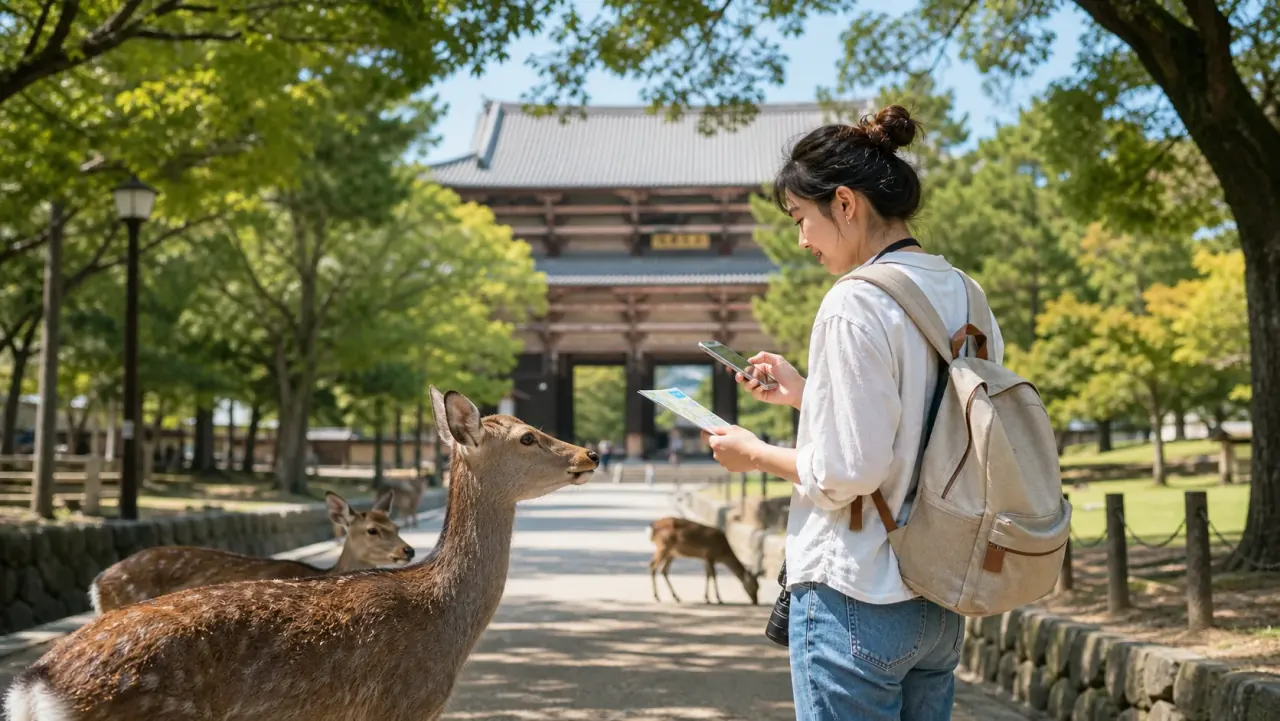
- Walk through Nara Park and treat the deer respectfully.
- Continue to Kasuga Taisha if you want a forest-shrine route.
- Return via Higashimuki Shopping Street or Sanjo-dori for food.
This route keeps backtracking low and works without a packed schedule. Add extra museums or gardens only if you still have energy after Todai-ji and the park walk.
Budget planning
The day-trip budget is usually train fare, one or two paid sights, lunch, snacks, and a buffer. Nara can stay inexpensive because the main park walking route is easy to enjoy without stacking many paid attractions.
Do not overpay for a private tour unless you specifically want guiding. For most first-time visitors, a self-guided route is enough if you plan the station and walking order.
Best timing
Start in the morning if Todai-ji is a priority. Midday can feel busy around the park and deer-cracker areas. A slower afternoon can still work if you mainly want a relaxed park walk and dinner back in Osaka or Kyoto.
In summer, heat matters. In winter, daylight matters. In peak seasons, leave more time for station queues, temple crowds, and food stops.
Deer etiquette
Nara's deer are part of the experience, but they are still animals. Feed only approved crackers where appropriate, keep food and maps secure, avoid teasing them, and give space to deer that seem pushy or tired.
Sources and current checks
Verify routes and opening details before traveling. Start with Nara official tourism information, Kintetsu Railway, and JR West for current rail information.
FAQ
Can I do Nara and Kyoto in the same day?
You can, but it is usually rushed. If you have enough days, give Nara its own day trip from Osaka or Kyoto.
Is Nara worth it on a 7-day Tokyo-Kyoto-Osaka trip?
Yes if you want one Kansai day trip and do not want another hotel change. Skip it only if Kyoto temple time is already too tight.
Do I need to stay overnight in Nara?
Most first-time budget travelers do not need to. Overnight Nara is calmer, but a day trip is the better value for a classic route.
Nara works best when your Osaka or Kyoto hotel base makes the train simple.
Use the 7-Day Route