- Best for
- Osaka or Kyoto travelers who want a different Kansai city without changing hotels
- Typical time
- 6 to 8 hours in Kobe, plus train time
- Best station check
- Sannomiya for the city core, Motomachi for Chinatown and harbor, Kobe for Harborland
- Main route
- Sannomiya, Kitano, Motomachi, Nankinmachi, Meriken Park, Harborland
- Budget note
- Train fare, one paid viewpoint or museum, snacks, and dinner are the main variables
Kobe is a useful Kansai day trip because it feels different from both Kyoto and Osaka. The city gives you harbor views, hillside streets, Motomachi food stops, Kitano's historic houses, and a compact downtown route without forcing another hotel move.
From Osaka or Kyoto?
| Base | Best first check | Why |
|---|---|---|
| Osaka Umeda | JR, Hankyu, or Hanshin | All can work; compare the station closest to your hotel and the Kobe stop you want. |
| Osaka Namba | Hanshin-connected routes | Often convenient if you are already near Namba and want fewer cross-town transfers. |
| Shin-Osaka | JR | A practical choice when your hotel or Shinkansen connection is already on JR. |
| Kyoto Station | JR | Usually the simplest first comparison for Kyoto Station hotels. |
| Kyoto Kawaramachi / Shijo | Hankyu | Can be efficient from central Kyoto if the transfer path is clean. |
JR vs Hankyu vs Hanshin
The best railway is the one that keeps your whole day simple. JR is useful for Kyoto Station, Shin-Osaka, Osaka Station, Sannomiya, Kobe Station, and connections where speed and transfer clarity matter. Hankyu is useful for a Umeda or Kyoto Kawaramachi style route into Kobe-Sannomiya. Hanshin can be useful from Osaka Namba or Umeda, especially if it avoids crossing Osaka to another station.
Do not choose a railway only because it is slightly cheaper. For a day trip, one bad transfer can cost more time than the fare difference is worth. Check the current fare, travel time, and platform path on the day you book.
Simple first-time Kobe route
- Arrive around Sannomiya and orient yourself before committing to the full day.
- Walk uphill to Kitano if you want historic houses, cafes, and hillside streets.
- Return toward Sannomiya and continue to Motomachi or Nankinmachi for food.
- Walk or ride toward Meriken Park for the harbor, Port Tower area, and waterfront photos.
- Finish at Harborland if you want an easy evening view before taking the train back.
This order keeps the hillier section earlier and gives you a flexible finish. If the weather is bad, shorten Kitano and keep the harbor walk for the clearer part of the day.
Harbor, Meriken Park, and Harborland
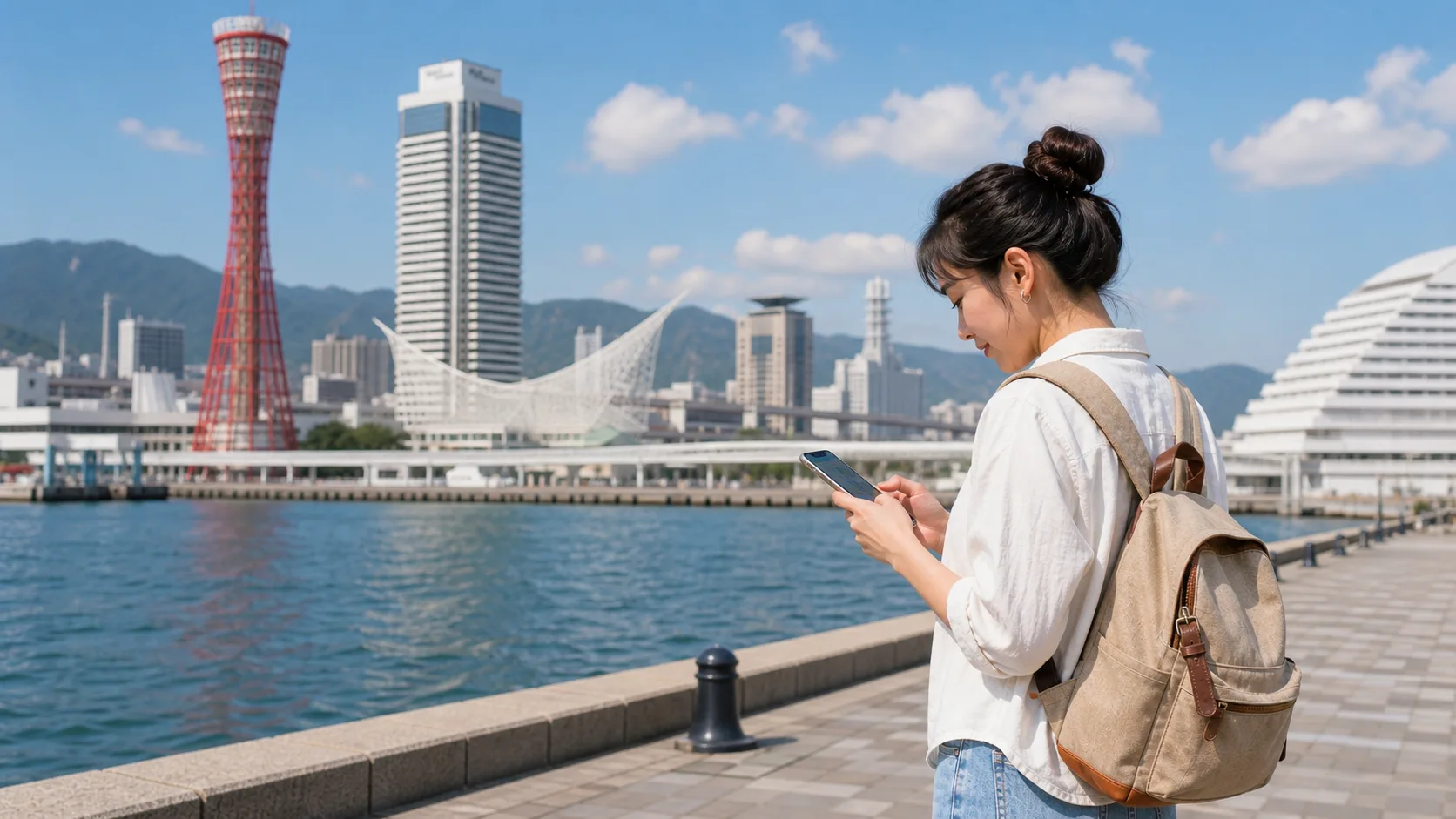
For first-time visitors, the Kobe waterfront is the easiest place to understand why Kobe is not just another Osaka side trip. Meriken Park, Port Tower views, the Maritime Museum area, and Harborland are close enough to combine without complex transit.
If you are traveling on a tighter budget, treat the harbor as the main free attraction and spend on one meal or one paid viewpoint only if the weather makes it worthwhile.
Kitano, Sannomiya, and Motomachi
Kitano is best when you want a slower city walk and a hillside feel. Sannomiya is the transport and shopping core. Motomachi and Nankinmachi work well for food stops and a natural bridge toward the harbor side.
For a first visit, do not stack every paid house, museum, and shopping street. Pick one paid stop at most, then use walking time to connect the neighborhoods.
Budget planning
The realistic Kobe day-trip budget is train fare, local transit if you do not want to walk, snacks or lunch, dinner if you stay late, and one optional paid attraction. Kobe can be inexpensive if you avoid turning the day into a luxury beef meal plan.
If Kobe beef is the main reason you are going, research prices before you travel and separate that from a normal budget day trip. Otherwise, Kobe is strongest as a harbor-and-neighborhood day, not as a required high-spend food day.
Best timing
Start late morning if you want a relaxed lunch-to-evening day. Start earlier if you are coming from Kyoto, adding Kitano, or trying to keep dinner back in Osaka. The harbor side is especially useful near late afternoon because the light and skyline views are usually better than a rushed midday stop.
In summer, keep the hill walk short and use more breaks. In winter, check daylight and prioritize the harbor earlier if you want photos.
Should Kobe replace Nara?
Kobe and Nara solve different trip problems. Choose Nara if you want temples, park walking, and a classic cultural day. Choose Kobe if you want a coastal city, easier evening views, cafes, shopping streets, and less temple repetition after Kyoto.
For a first Tokyo-Kyoto-Osaka trip, Nara is usually the classic pick. Kobe is the better second Kansai day trip or the better swap when you already feel temple fatigue.
Sources and current checks
Verify train times and attraction details before traveling. Start with Kobe official access information, VISIT KOBE, JR West, Hankyu Railway, and Hanshin Electric Railway.
FAQ
Is Kobe worth a day trip from Osaka?
Yes. Kobe is close enough from Osaka to work as a low-friction day trip, especially if you want harbor views, Kitano, Motomachi, or a different city feel.
Is Kobe worth a day trip from Kyoto?
Yes if you start early and keep the route focused. If your Kyoto time is already short, Nara or more Kyoto time may be a better first choice.
Do I need to stay overnight in Kobe?
Most budget travelers do not need to stay overnight for the classic harbor, Kitano, Sannomiya, and Motomachi route. Overnight Kobe makes sense if you want nightlife, Arima Onsen, or a slower Hyogo itinerary.
Kobe works best when your Osaka or Kyoto base keeps the train simple and your day does not duplicate Kyoto temple time.
Use the 7-Day Route