- Best base
- Namba for food and nightlife, Umeda for rail and day trips
- Day 1
- Namba, Kuromon or Shinsaibashi, Dotonbori, Shinsekai or Tennoji
- Day 2
- Osaka Castle, Umeda, optional Osaka Bay, or a day-trip swap
- Budget pressure
- Food snacking, paid viewpoints, aquarium or theme park choices, and hotel base
- Skip if rushed
- Universal Studios Japan, full bay day, and multiple day trips inside the same two days
Two days in Osaka is enough for a strong first visit if you keep the route compact. The goal is not to see every neighborhood. It is to connect Osaka's food zones, castle area, retro south-side streets, and one north or bay-area choice without wasting money on cross-city backtracking.
Day 1: Namba, Dotonbori, and Shinsekai
- Start around Namba, Shinsaibashi, or Kuromon depending on your hotel and appetite.
- Walk toward Dotonbori before peak evening crowds if you want photos and canal views.
- Use late afternoon for Den Den Town, Tennoji, or Shinsekai rather than crossing to Umeda too early.
- Return to Dotonbori or Namba for casual dinner and an easy night walk.
This day works because the zones are close enough to connect without complex transfers. The budget risk is small purchases: snacks, drinks, game centers, and paid viewpoints can add up faster than the train fare.
Day 2: Osaka Castle, Umeda, or Osaka Bay
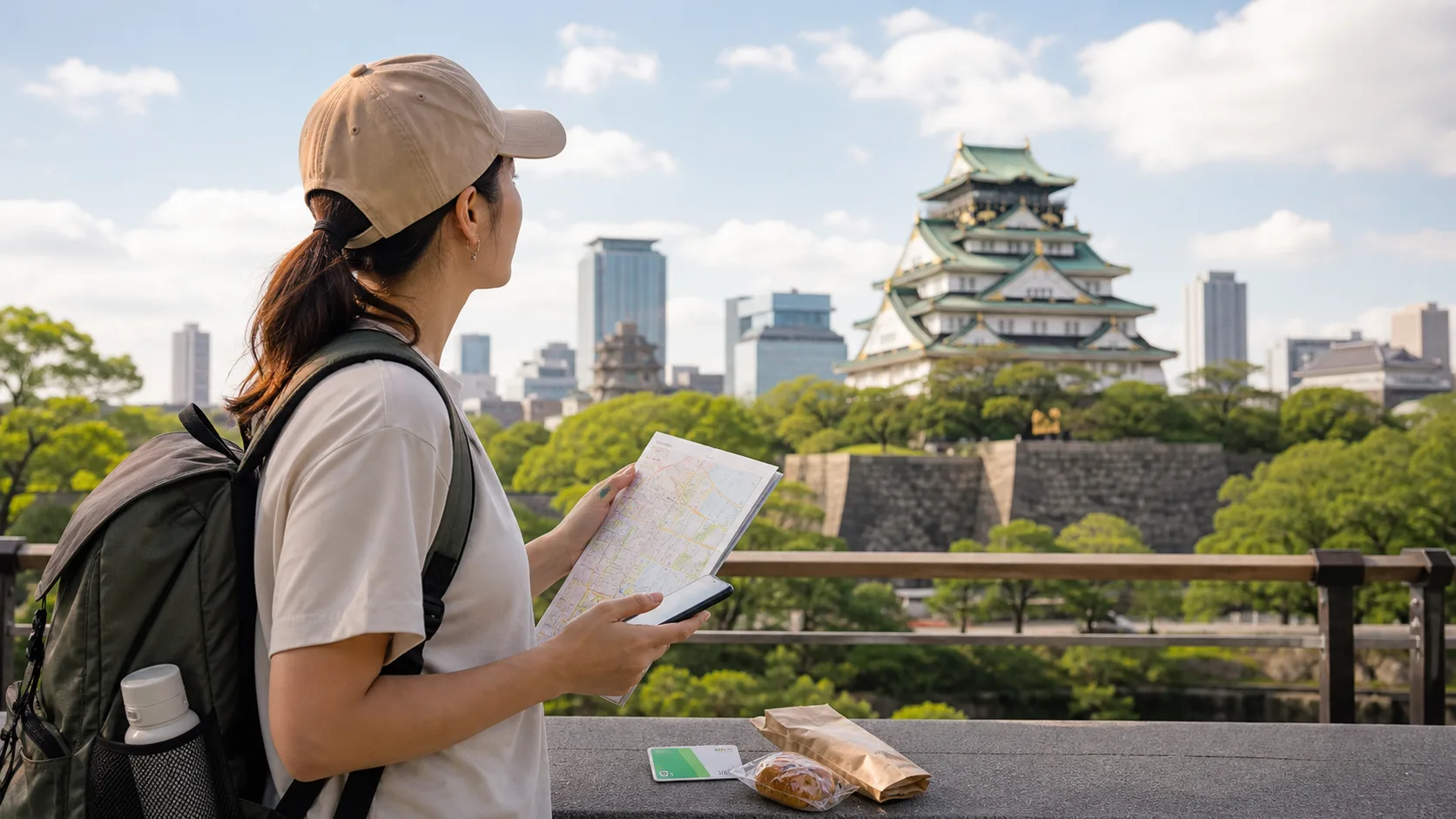
Start with Osaka Castle if it matters to you. Treat the castle and park as a half-day cluster, not a quick photo stop wedged between distant neighborhoods.
| Second half | Choose this if | Watch out for |
|---|---|---|
| Umeda | You want station-city shopping, food, evening views, and easy rail. | Underground malls can be confusing when tired. |
| Osaka Bay | You want aquarium, waterfront, or family-friendly attractions. | Paid attractions can change the budget quickly. |
| Slow Namba repeat | You want food, shopping, and a lower-stress final night. | It is less varied, but often more enjoyable. |
Where to stay for two days
Namba is the better base if your Osaka goal is food, nightlife, Dotonbori, and south-side walking. Umeda is the better base if Osaka is your transport hub for Kyoto, Kobe, Himeji, or airport connections.
Do not choose a cheap room far from both hubs unless the savings are large. In Osaka, a practical station base can save enough time and fatigue to justify a modestly higher nightly rate.
Budget notes
Osaka can be cheap if you keep food casual and avoid stacking paid attractions. It becomes expensive when you combine aquarium, viewpoints, theme parks, taxis, and repeated snack stops without a plan.
If Universal Studios Japan is essential, treat it as its own full day and cut another Osaka cluster. Do not pretend it fits neatly into a normal two-day city itinerary.
Should you add a day trip?
With only two Osaka days, add a day trip only if Osaka itself is not the priority. Nara is the classic first side trip, Kobe is the easiest city change, and Himeji is the strongest castle day. Each one deserves enough time to avoid turning the trip into station hopping.
Sources and current checks
Verify opening times, route details, and attraction costs before traveling. Start with OSAKA-INFO official tourism guide, OSAKA-INFO attractions, and JNTO Osaka Bay Area.
FAQ
Is Namba or Umeda better for first-time Osaka?
Namba is better for food and Dotonbori. Umeda is better for rail connections and a polished station base. Choose based on your next train day.
Can I do Kyoto as a day trip from Osaka during a 2-day Osaka stay?
You can, but then you no longer have two Osaka days. If Kyoto is important, give it its own time instead of squeezing it into an Osaka city route.
Is Osaka Castle worth it?
Yes if you treat it as a park and history cluster. If you only want a castle-focused day, Himeji is the stronger destination.
The two-day route changes depending on whether you sleep near Namba, Umeda, or Shin-Osaka.
Compare Osaka Hotel Areas