- Best base
- Kyoto Station for rail and luggage, Shijo-Kawaramachi for evening walks and food
- Day 1
- Higashiyama, Kiyomizu area, Yasaka, Gion, Nishiki or central Kyoto
- Day 2
- Fushimi Inari early, then Arashiyama or a calmer central Kyoto route
- Budget pressure
- Paid temples, buses, snacks, and hotel area matter more than expensive tours
- Skip if rushed
- Too many far-apart temples, full Arashiyama plus full northern Kyoto, or Nara on the same two days
Two days in Kyoto should feel focused, not frantic. The mistake is trying to collect every famous temple. A better budget route groups east Kyoto, central Kyoto, Fushimi Inari, and one bigger second-day zone without crossing the city too many times.
Day 1: Higashiyama, Gion, and central Kyoto
- Start early around Kiyomizu-dera or the southern Higashiyama streets.
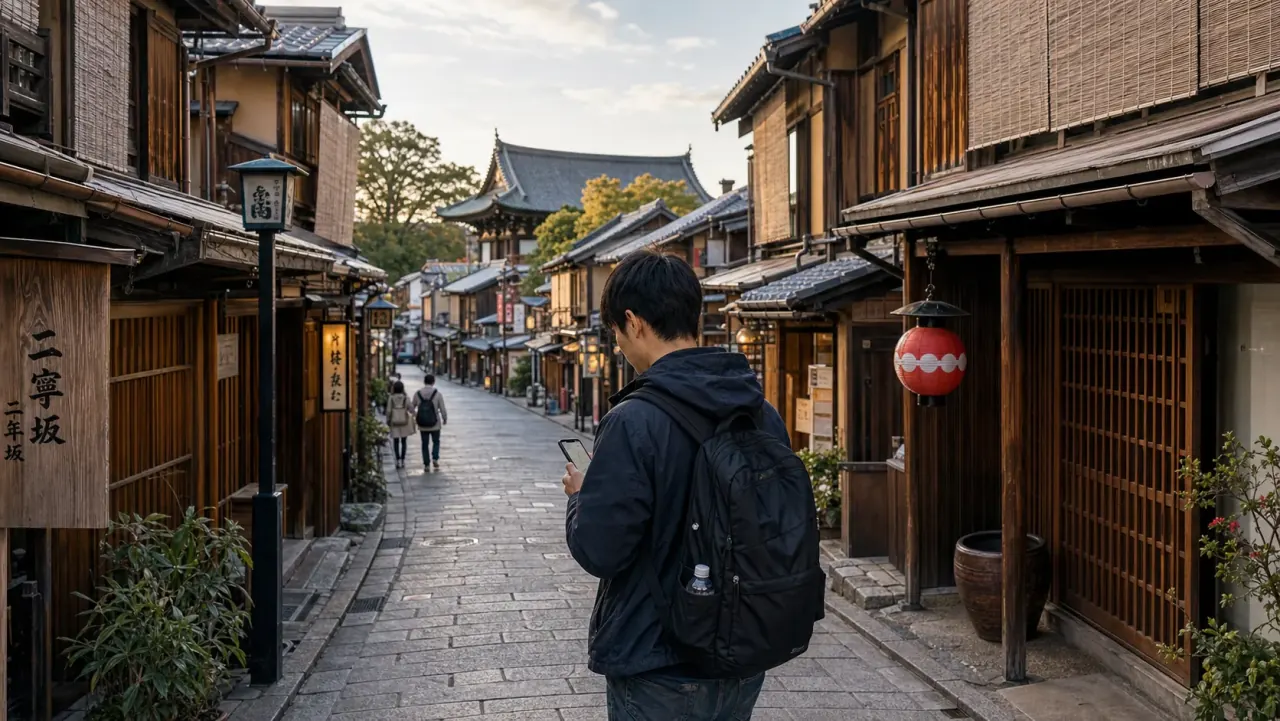
- Walk through Sannenzaka, Ninenzaka, and Yasaka area before the busiest middle of the day.
- Use Maruyama Park or Gion as a slower transition rather than adding distant temples.
- Finish around Nishiki, Shijo, Kawaramachi, or Pontocho depending on your budget and energy.
This day works because the sights connect by walking. Pay for the temple or garden that matters most, then keep food flexible. The budget win is avoiding taxis and repeated bus transfers.
Day 2: Fushimi Inari plus Arashiyama or central Kyoto
Start with Fushimi Inari if it is a priority. It is easier to enjoy early and easier to shorten than Arashiyama. You do not need to climb every gate route unless hiking is the point of the day.
| Second half | Choose this if | Watch out for |
|---|---|---|
| Arashiyama | You want bamboo, river scenery, and a classic west Kyoto cluster. | It needs a real half-day and can feel crowded. |
| Central Kyoto | You want Nishiki, shopping streets, cafes, and less train time. | It is less dramatic, but easier and cheaper. |
| Uji | You want Byodoin, matcha, and a calmer rail-connected side trip. | Do not add it after a late Fushimi start. |
Where to stay for two days
Choose Kyoto Station if luggage, rail access, Fushimi Inari, Uji, Nara, or Osaka connections matter. Choose Shijo-Kawaramachi if evening walks, food, and central Kyoto access matter more.
Do not pick the cheapest room without checking the bus or rail route. A low nightly rate can lose value if every morning starts with a slow transfer.
Budget notes
Kyoto budget pressure comes from stacking paid temples, snacks, taxis, and poor hotel location. A strong two-day route can stay affordable if you choose one or two paid highlights per day and let walking connect the rest.
Food does not need to be elaborate. Convenience stores, casual noodle shops, bakeries, and department-store basement food can cover the gaps between sightseeing zones.
What to skip with only two days
- Do not combine Nara with the same two Kyoto sightseeing days unless Kyoto is not your priority.
- Do not do full Arashiyama, northern temples, Fushimi Inari, and Gion in one day.
- Do not chase every Instagram street at peak time if it forces expensive transport.
- Do not assume buses are always easier than rail and walking.
Sources and current checks
Verify opening times and route conditions before traveling. Start with Kyoto City Official Travel Guide, Kyoto official Fushimi area information, and JR West for route context.
FAQ
Is Kyoto Station or Shijo-Kawaramachi better for two days?
Kyoto Station is better for rail, luggage, and day trips. Shijo-Kawaramachi is better for evening food, walking, and central Kyoto. Both can work if the route is planned around the base.
Can I add Nara to a two-day Kyoto itinerary?
You can, but then one of the Kyoto days becomes thin. If Kyoto is the priority, keep Nara as a separate third day or use Uji as the lighter side trip.
Is Arashiyama worth it with only two days?
Yes if you give it a real half-day. Skip or shorten it if your Day 2 already includes Fushimi Inari, long meals, and hotel transfers.
The two-day route changes depending on whether you sleep near Kyoto Station or Shijo-Kawaramachi.
Compare Kyoto Hotel Areas