- Last reviewed
- June 14, 2026
- Best for
- Travelers visiting Japan from summer through autumn
- Use this to decide
- Route buffers, hotel cancellation, airport timing, long-distance train moves, and insurance checks
- Check before booking
- Official weather warnings, airline and rail status, hotel terms, and travel insurance coverage
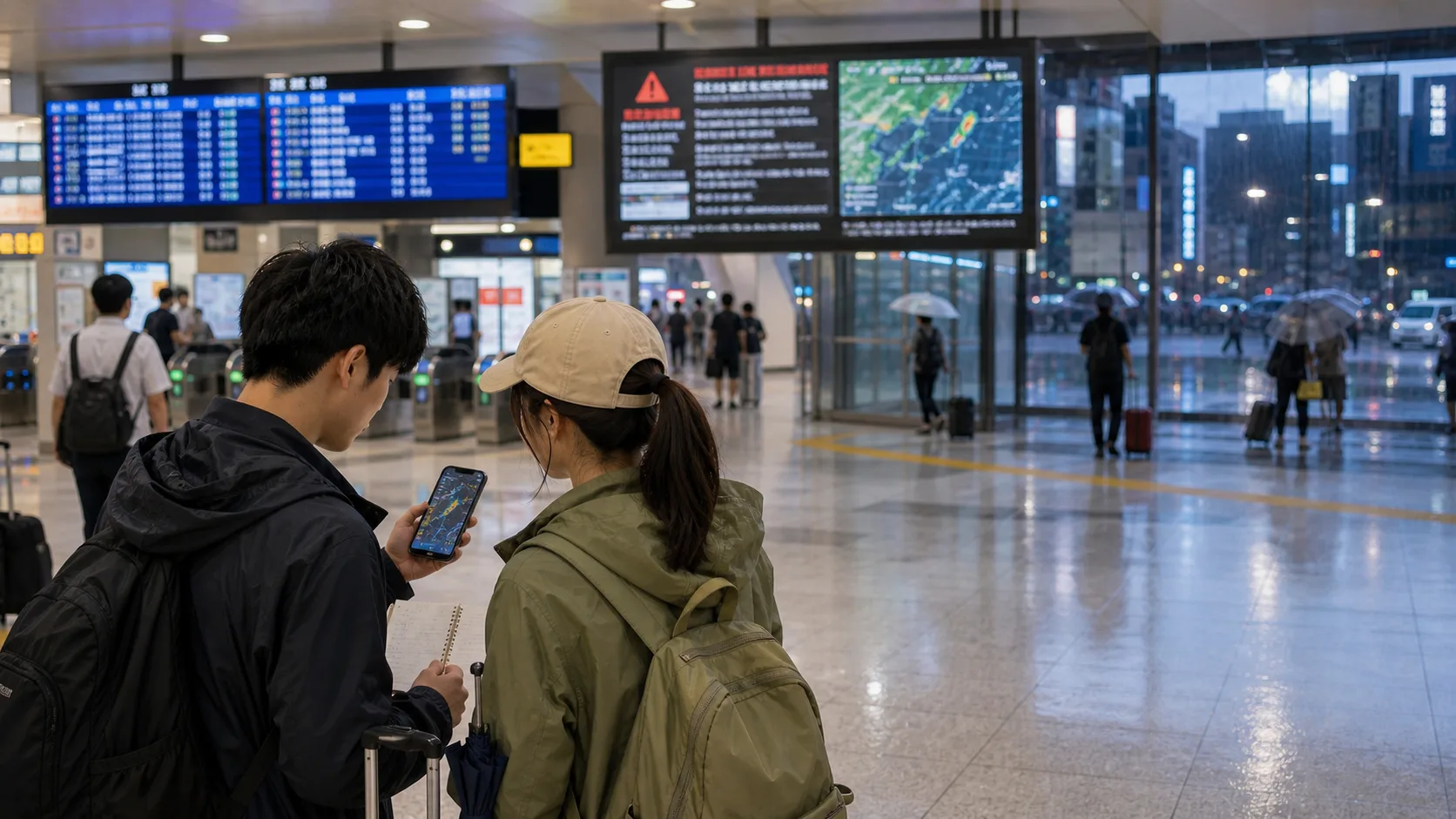
Typhoon season does not mean every Japan trip is unsafe or ruined. It means a budget route needs fewer fragile connections, better cancellation terms, and a clear plan for what to do when weather changes flights, trains, or outdoor days.
When typhoon planning matters most
Japan can see heavy rain, strong wind, transport suspensions, and local warnings during typhoon season. The exact risk changes by year, region, and storm track, so use this guide as a booking framework and verify current conditions close to travel.
| Trip choice | Why it becomes fragile | Budget move |
|---|---|---|
| Arrival day transfer | Flights, airport trains, and buses can be delayed. | Sleep near arrival city instead of forcing a same-day long-distance move. |
| Shinkansen day | Weather can affect long-distance rail plans. | Avoid same-day train plus international flight combinations. |
| Remote day trip | Outdoor viewpoints and buses are weather-sensitive. | Keep Fuji, islands, mountains, and coastal plans flexible. |
| Checkout chain | Three nonrefundable hotels can trap the route. | Use refundable terms until weather and route are clearer. |
Booking rules for budget travelers
The cheapest booking is not always the cheapest outcome. During typhoon season, flexibility has a real value because one disruption can create extra hotel nights, missed activities, and transport changes.
Nonrefundable can still make sense for stable city nights, but use caution around arrival, departure, and city-change nights.
Try not to put a famous day trip, long train ride, and international flight into one weather-sensitive chain.
Do not head to a major station with luggage until you have checked current rail information.
Mount Fuji, islands, hiking, boats, and coastal views are more weather-sensitive than city museums.
City strategy during bad weather
Large cities are easier to salvage than tightly scheduled rural or coastal routes. Tokyo, Osaka, Kyoto, Nagoya, Fukuoka, and Sapporo all have indoor options, dense transport, and more hotel inventory than small resort towns.
- Tokyo: use museums, department stores, underground passages, station areas, and neighborhood food plans.
- Kyoto: shorten temple walks and shift to food streets, museums, hotels, or nearby covered areas.
- Osaka: Namba, Umeda, and covered shopping streets make rainy plans easier.
- Fuji and mountain areas: treat views as optional until the weather window is real.
Travel insurance checks
Travel insurance is not a magic refund button. Read the policy before buying and check delay, cancellation, interruption, missed connection, baggage, medical, and extra accommodation terms. Also check whether coverage depends on when the storm was named, forecast, or officially warned.
| Coverage area | Question to ask | Why it matters |
|---|---|---|
| Trip delay | How many hours before benefits start? | A short delay may not qualify. |
| Cancellation | Does weather qualify, and under what conditions? | Policies differ by trigger and timing. |
| Extra hotel | Are forced extra nights covered? | This is the real budget risk if transport stops. |
| Missed connection | Are self-booked separate tickets covered? | Budget travelers often split bookings. |
Sample buffer plan
A buffer does not mean wasting a day. It means using a flexible city day in the place where a delay hurts least.
| Route point | Safer plan | Risky plan |
|---|---|---|
| Arrival | Land in Tokyo, stay in Tokyo first night. | Land, clear immigration, then ride to Kyoto the same night. |
| Middle route | Put flexible Osaka or Tokyo indoor days near move days. | Schedule Fuji, coastal trip, and Shinkansen moves back to back. |
| Before flight home | Return to departure city at least the prior day. | Long-distance train to airport on flight day. |
What to do when a storm is forecast
- Check Japan Meteorological Agency information and local official updates.
- Check your airline, airport, and rail operator status before moving.
- Move important transport earlier only if it is clearly safer and available.
- Keep receipts for extra accommodation or transport if you may claim insurance.
- Switch outdoor sightseeing to indoor city plans and avoid risky coastal or mountain areas.
Sources and official checks
Use the Japan Meteorological Agency for official weather and warning information. Also check JNTO emergency guidance, your airline, airport, rail operator, hotel, and local government pages before travel decisions.
FAQ
What months are most important for typhoon planning?
Typhoon planning matters most from summer into autumn, but exact timing and impact vary. Use official forecasts and warnings close to your travel dates instead of relying on averages alone.
Should I cancel my Japan trip if a typhoon appears?
Not automatically. First check the storm path, official warnings, airline and rail status, hotel terms, and insurance coverage. A city itinerary may be adjustable while an outdoor-heavy route may need bigger changes.
Is the JR Pass useful during typhoon disruption?
A pass does not remove weather risk. The more important decision is whether your route has enough time buffer and whether you can avoid same-day long-distance moves before flights.
Use city buffers, flexible hotels, and official status checks before moving with luggage.
Open Route Hub