- Best overall budget base
- Ueno or Asakusa for many first trips
- Best nightlife base
- Shinjuku if the price premium is acceptable
- Best transport base
- Tokyo Station or Shinagawa for rail-heavy plans
- Best airport fit
- Ueno for Narita, Shinagawa for Haneda or Shinkansen
- Compare before booking
- Station exit, room size, airport route, late-night return, and total taxes
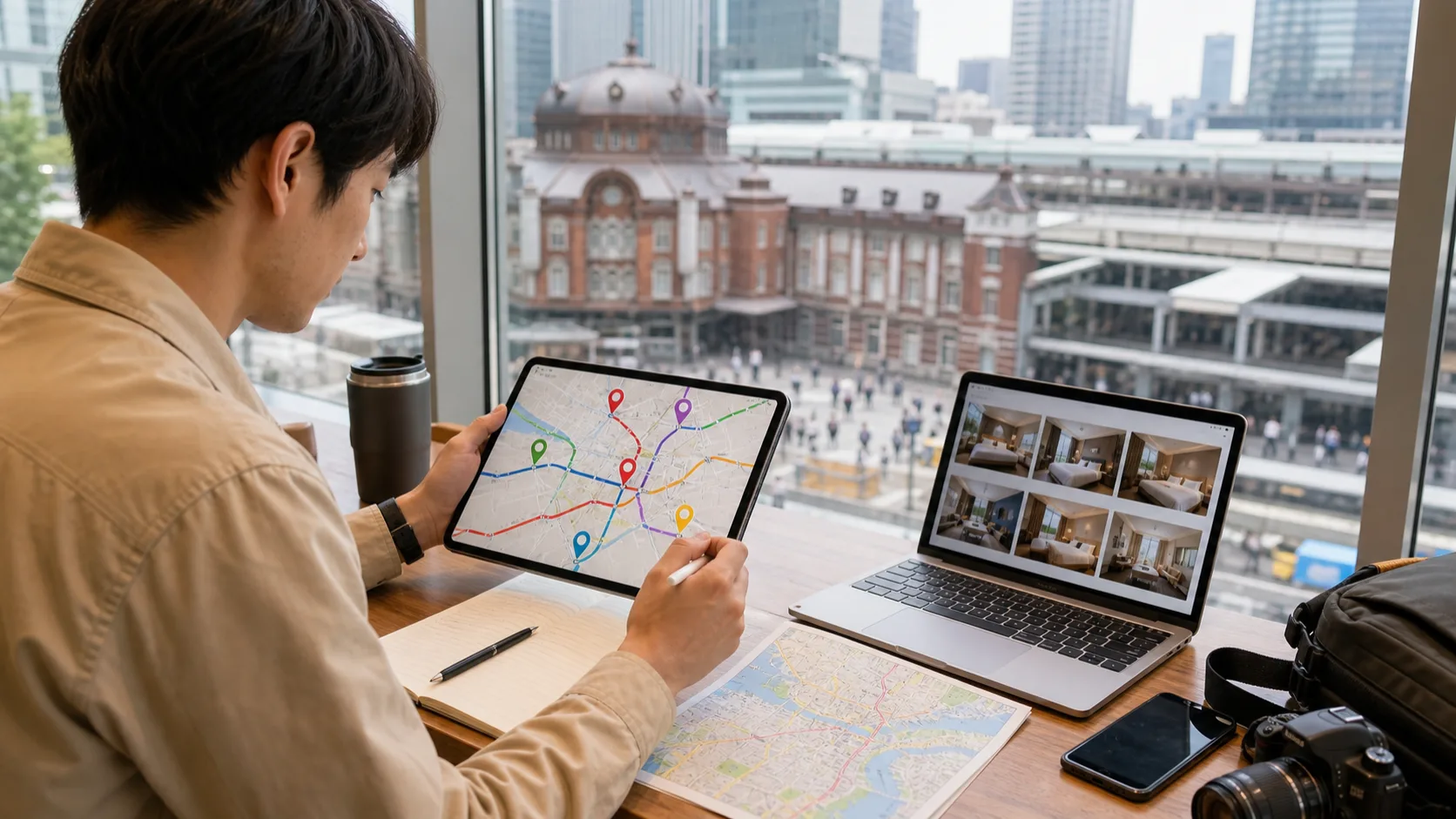
Tokyo hotel advice often starts with famous neighborhoods, but budget travelers should start with friction. A hotel that is $20 cheaper can lose value if it adds daily transfers, long station walks, or a difficult airport arrival.
Tokyo hotel area comparison table
| Area | Best for | Watch out for |
|---|---|---|
| Ueno | Narita access, food, museums, value hotels | Less polished than Ginza or Tokyo Station. |
| Asakusa | Traditional atmosphere, budget stays, Senso-ji | Some routes require transfers; check exact station. |
| Shinjuku | Nightlife, transport, west Tokyo, day trips | Higher prices and a complex station. |
| Tokyo Station / Marunouchi | Shinkansen, Ginza, central plans | Budget rooms can be limited. |
| Ginza | Shopping, dining, polished central base | Usually not the cheapest sleep. |
| Ikebukuro | Value, food, west/north Tokyo access | Not as classic for first-time sightseeing. |
| Shinagawa | Haneda, Shinkansen, business hotels | Efficient, but less atmospheric. |
Ueno
Ueno is one of the strongest first checks for budget travelers. It has good Narita access, strong food options, museums, parks, and often better hotel value than Shinjuku or Ginza.
Choose Ueno if you land at Narita, want a practical base, and do not need late-night Shinjuku every night. Check the exact station side because Ueno, Okachimachi, and nearby stops can feel different with luggage.
Asakusa
Asakusa gives a more traditional Tokyo feel and can offer good hotel value. It is a strong fit for Senso-ji, Sumida River, Tokyo Skytree side trips, and travelers who prefer quieter evenings.
The tradeoff is route fit. Asakusa has multiple station names and lines nearby, so verify the exact airport route and daily train connections before booking.
Shinjuku
Shinjuku is convenient for nightlife, restaurants, late trains, and some day trips. It is often the easiest area to recommend when money is not the main constraint.
Budget travelers should be stricter. If Shinjuku costs much more, ask whether you will actually use the nightlife and west-side access enough to justify it. The station is large, so a hotel "near Shinjuku" can still mean a long walk.
Tokyo Station and Ginza
Tokyo Station is excellent for Shinkansen, Marunouchi, Ginza, and central routes. Ginza is polished and easy for dining and shopping. Both can be practical but may be harder for budget hotel hunting.
Pay the premium when it saves a transfer or supports a rail-heavy itinerary. Skip the premium when Ueno, Asakusa, or Ikebukuro gets you similar access at a better nightly rate.
Ikebukuro and Shinagawa
Ikebukuro can be a good value base with major rail access, food, shopping, and decent hotel supply. It is less iconic than Shinjuku, but can work well if prices are better.
Shinagawa is practical for Haneda access and Shinkansen plans. It is efficient rather than atmospheric, which is fine if your hotel is mainly a clean transport base.
Match the area to your airport
Narita travelers should check Ueno and Nippori-side access carefully. Haneda travelers should check Shinagawa, Hamamatsucho, and central routes. If airport arrival is late, a slightly more expensive hotel with an easier transfer may be the better budget decision.
Booking checklist
- Search by exact station, not only neighborhood name.
- Check the walk from the correct station exit.
- Compare room size and bed type, especially for two travelers.
- Check whether taxes and city accommodation fees are included.
- Test the airport route and first sightseeing route before paying.
- Read recent reviews for noise, elevators, luggage storage, and late check-in.
Sources and current checks
Use current transit and hotel information before booking. Start with official airport transfer pages for Narita Airport and Haneda Airport, then compare final hotel prices including taxes and fees.
FAQ
Is Ueno or Asakusa better for budget travelers?
Ueno is usually stronger for Narita access and transport. Asakusa is better for atmosphere and a calmer traditional feel. Both can be good value.
Is Shinjuku too expensive?
Not always, but it often carries a premium. Choose it when nightlife, transport convenience, and west-side plans matter enough to justify the rate.
Where should I stay for a first Tokyo trip?
Start by checking Ueno, Asakusa, Shinjuku, Tokyo Station, and Ginza. Pick the area that fits your airport route and daily sightseeing plan.
The best Tokyo hotel area is the one that keeps both arrival day and daily sightseeing simple.
Read the Tokyo Hotel Guide