- Last reviewed
- June 14, 2026
- Best for
- Budget travelers, late arrivals, rainy days, early starts, and families needing quick food
- Use this to decide
- What to buy for breakfast, lunch, snacks, dinner backups, and travel days
- Check before buying
- Allergens, heating rules, expiration time, trash rules, and whether a nearby restaurant is better value
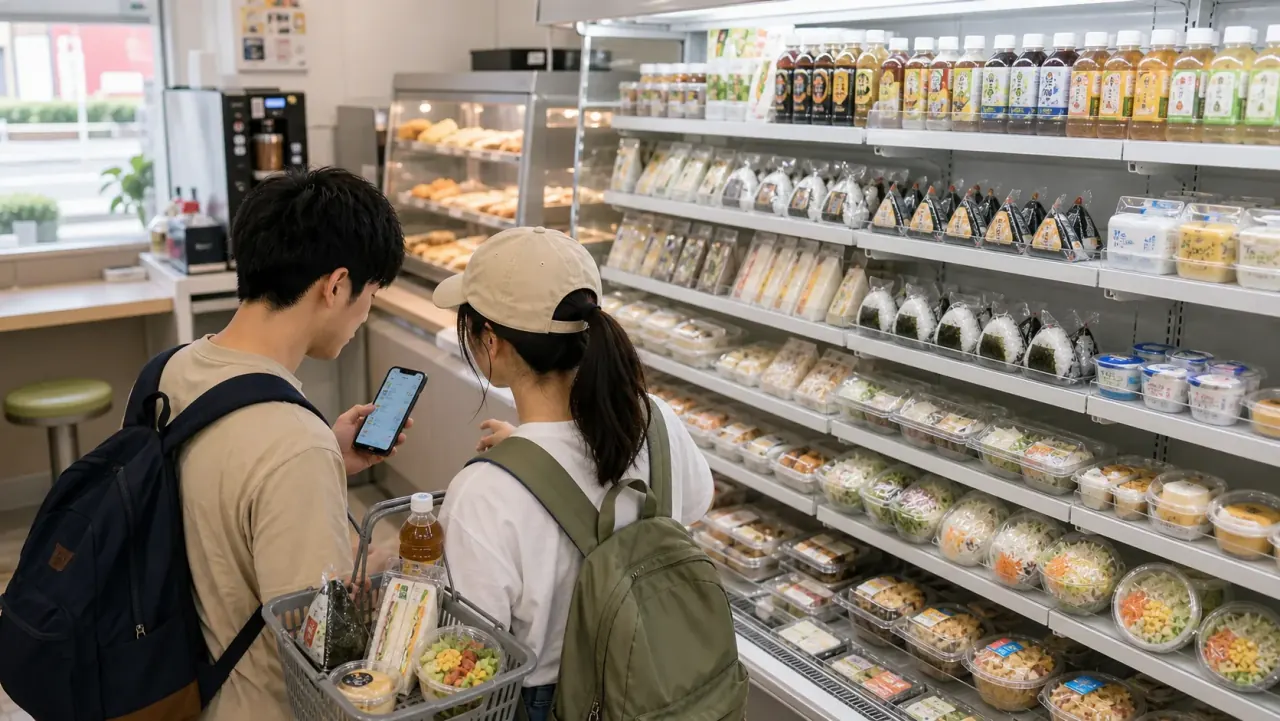
Japanese convenience stores are one of the easiest ways to keep a trip budget under control. They are not just for emergency snacks: they can solve early breakfasts, late arrivals, rainy days, train transfers, and awkward gaps between sightseeing blocks.
Best uses for convenience stores
The value is not only price. It is speed, predictability, and location. A convenience store meal can protect the day when your hotel breakfast is expensive, your train leaves early, or rain makes restaurant hunting annoying.
| Use case | Good buy | Budget logic |
|---|---|---|
| Early breakfast | Rice ball, sandwich, yogurt, coffee, tea, or fruit | Fast before trains, tours, or temple starts. |
| Light lunch | Salad plus rice ball, sandwich plus soup, or small bento | Good when you want to save dinner money. |
| Train day | Portable food, bottled drink, wipes, small dessert | Avoids expensive station panic buying. |
| Late arrival | Bento, hot snack, instant soup, or simple noodles | Useful when restaurants near the hotel are closed. |
| Rainy day | Food hall backup, convenience-store drink, snack, umbrella | Keeps the route moving without a taxi or long wet walk. |
Simple meal formulas
Instead of buying random items, build a meal. This keeps spending predictable and makes the food more satisfying.
Good before a train, museum opening, or early temple route.
Useful when dinner is the meal you want to spend on.
Works when you need food before a Shinkansen, bus, or airport transfer.
Better than wandering tired streets after a delayed arrival.
What to buy first
Start with the practical items, then add the fun item. This prevents the classic mistake of spending more on drinks, desserts, and limited-edition snacks than on a real meal.
- Rice balls: cheap, portable, and useful for breakfast or train days.
- Sandwiches: easy when you want something light and quick.
- Salads and vegetables: useful when restaurant meals have been heavy.
- Bento and noodles: good backup dinner when timing is awkward.
- Bottled tea or water: cheaper and easier than repeated cafe stops.
- Small dessert: choose one, not three, if the goal is budget control.
When not to use convenience stores
Convenience stores are good, but they are not always the best value. Japan has many affordable casual meals that feel more memorable and filling.
| Situation | Better option | Why |
|---|---|---|
| You want a hot filling dinner | Ramen, curry, gyudon, soba, udon, or set meal | Often more satisfying than a large convenience-store basket. |
| You are in Osaka or food-heavy areas | Casual local restaurants or street-food areas | The city experience is part of the value. |
| You keep buying snacks | One planned restaurant meal | Small purchases can exceed a normal meal. |
| You need dietary certainty | Official allergen info, hotel help, or restaurant confirmation | Labels and ingredients can be hard to interpret quickly. |
Mistakes to avoid
- Buying too many novelty snacks and calling it a meal.
- Ignoring nearby casual restaurants that may be better value.
- Forgetting hotel rooms may not have much eating space.
- Assuming every store has the same stock at night.
- Missing allergen, pork, seafood, alcohol, or caffeine details because the packaging looks simple.
Where convenience stores help the route
Convenience stores are especially useful on days where timing matters more than food atmosphere: airport arrivals, early shrine mornings, rainy Tokyo days, luggage transfers, fireworks nights, and long train moves.
Buy a simple meal near the hotel instead of overpaying for tired food choices.
A drink and small snack can stop a wet day from turning into a taxi-and-cafe spiral.
Choose food before the station gets crowded or the best shelves are empty.
Quick food can protect the day when children or group members need a break.
Sources and official checks
Product ranges and seasonal items change often. Check current product pages from 7-Eleven Japan, FamilyMart, and Lawson when you need up-to-date item details or allergen information.
FAQ
Is convenience store food in Japan good?
It is generally reliable, clean, and useful for budget travelers. It is best for convenience and simple meals, not as a replacement for every local food experience.
Can I eat inside the convenience store?
Some stores have eat-in areas, but many do not. Check the store layout and local rules before opening food. Otherwise use your hotel room, a permitted public area, or a proper restaurant.
How do I avoid overspending?
Choose a meal formula first, then add one fun item. Drinks, desserts, and seasonal snacks are the easiest way to spend more than planned.
Use convenience stores for the awkward meals, then spend intentionally on the meals you care about.
Open Trip Cost Guide